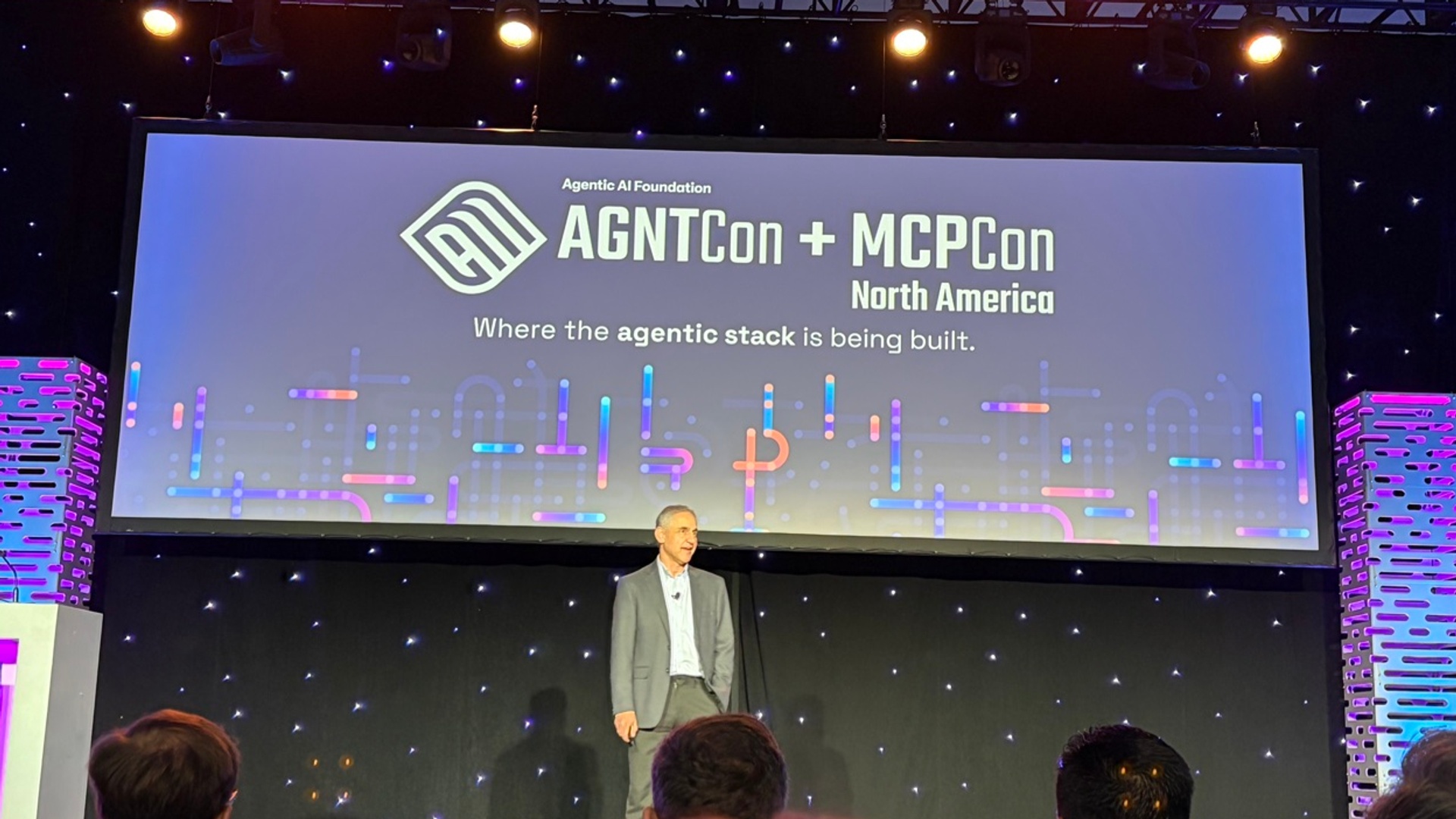
At AGNTCon + MCPCon last week, Digital Meld co-founder Brad Groux asked a question during Andrew Nolan’s session on the agentic web: where do field workers fit into all of this?
Brad works with businesses where people wear coveralls, operate equipment, and spend their days away from a desk. Their work belongs in the conversation about AI. They bring requirements that developers can miss, from legacy systems and unreliable connectivity to the consequences of an action in the physical world.
That question connects much of what Brad brought home from San Jose: open technology needs people with different kinds of expertise contributing to it. The future of AI is open, and making it useful will take a village.
Thank you to the Block and Buzz team for inviting Brad to AGNTCon + MCPCon, and to the speakers, organizers, maintainers, and attendees who made time to share their work.
Buzz and a workplace people and agents can share
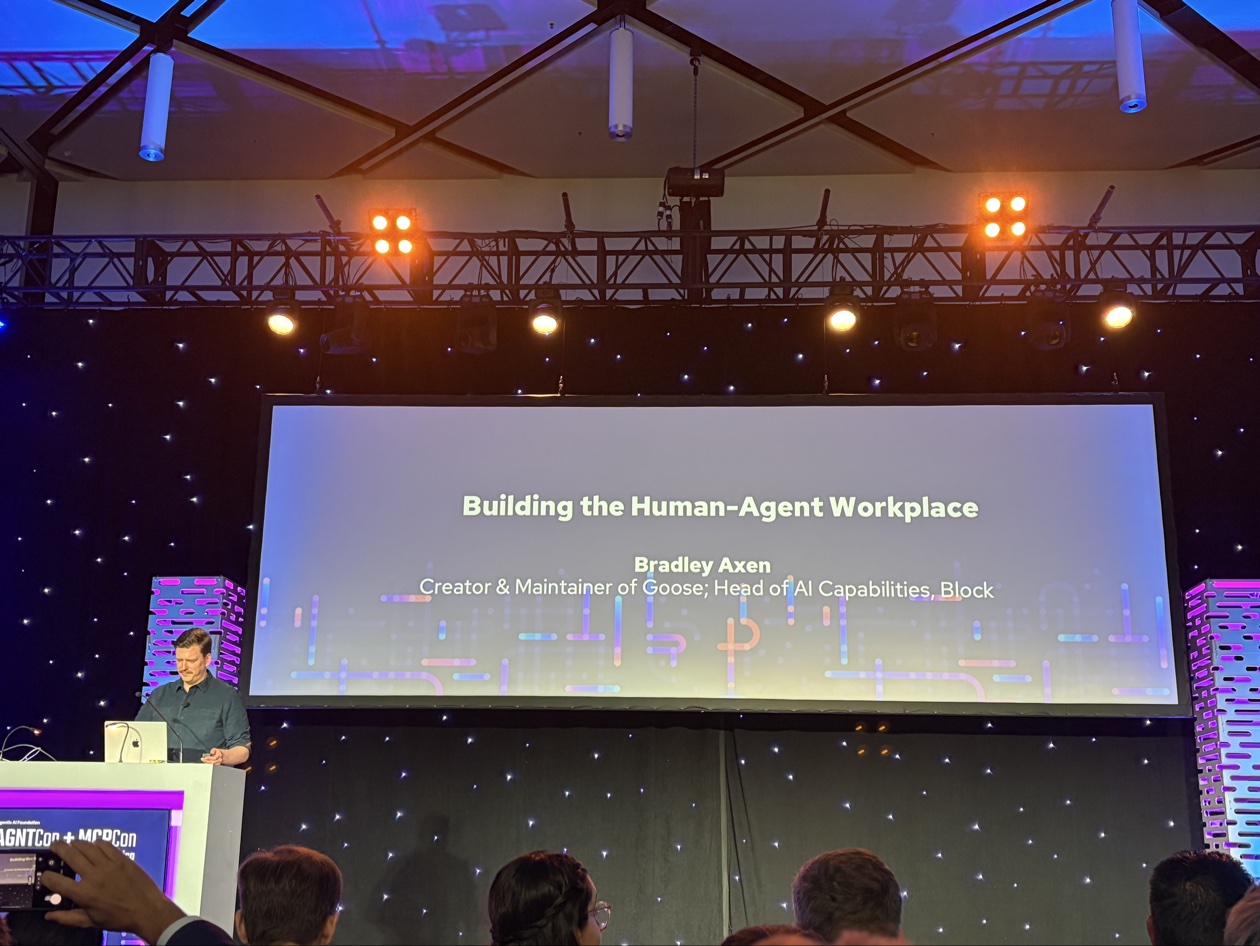
Brad attended Bradley Axen’s opening-day keynote, Building the Human-Agent Workplace, and spent time with the Buzz team at the showcase. His updates from the booth capture some of that enthusiasm.
Buzz brings people, conversations, projects, and agents into a shared workspace. The new Buzz 1.0 app is in beta, with support for running agents through harnesses including Claude, Codex, Goose, and Pi. The appeal is being able to work with an agent in the same conversation as the people who need the result.
For a team, the surrounding context matters. Someone needs to understand what was requested, what the agent did, and what still needs review. A shared conversation gives colleagues somewhere to continue that work together.
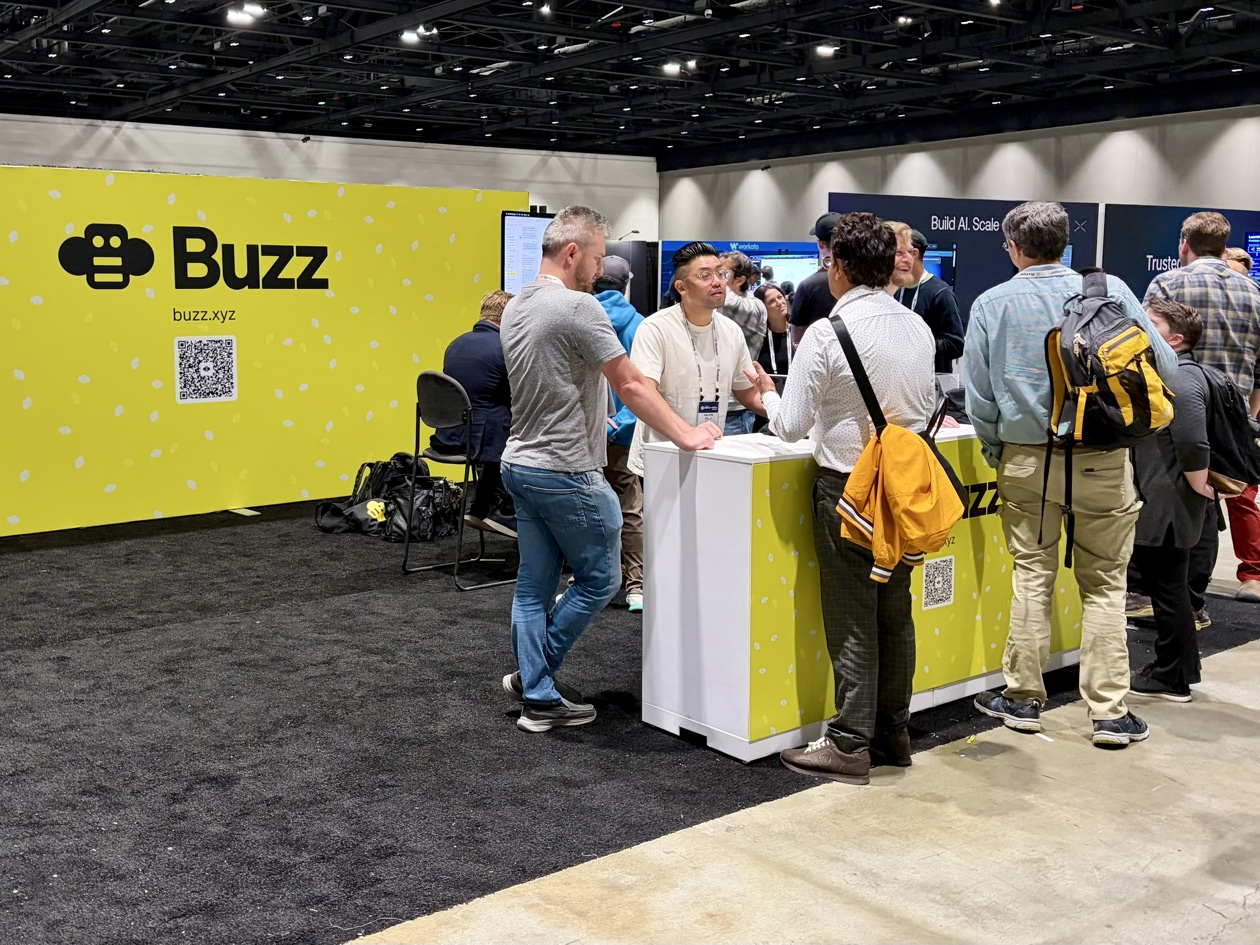
Brad has been contributing to Buzz and following the new app’s development. Seeing the people behind it at the conference made the community side of the project visible too. Open-source software depends on people answering questions, reviewing changes, fixing small problems, and helping someone else get started.
Thursday evening: Training Agents IRL with Hugging Face and GitHub
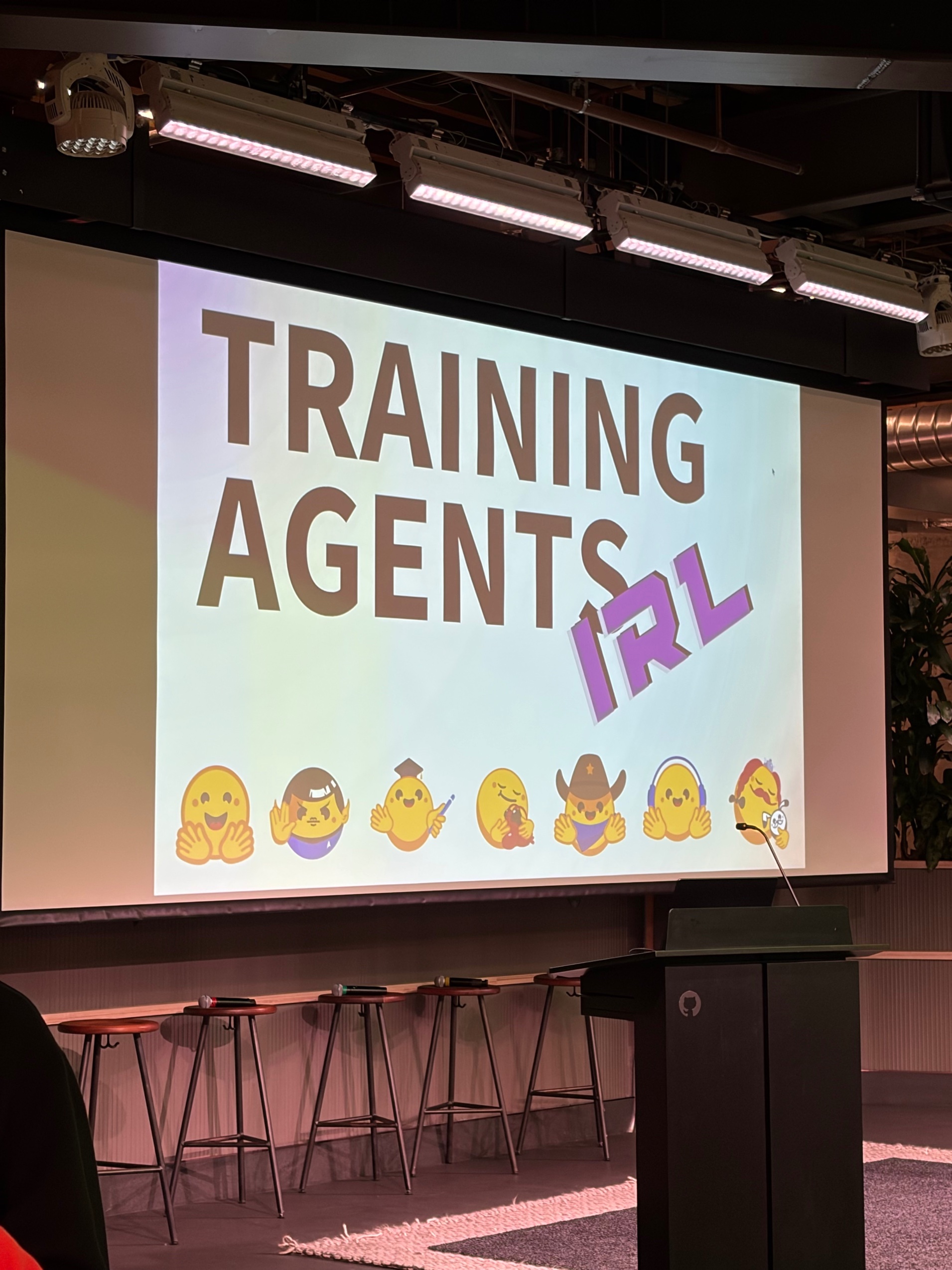
On Thursday evening, Brad headed to GitHub in San Francisco for Training Agents IRL, hosted by GitHub and Hugging Face as part of Open Source AI Week. Ben Burtenshaw brought together researchers and builders to discuss training and evaluating agents, followed by a panel.
The evening added a useful layer to the conference. Connecting an agent to tools is only part of the work. Developers also need a way to teach it a task, judge the result, and understand whether an improvement carries over to real users.
Govind Kamtamneni’s talk started with business outcomes. Customers care about accuracy, latency, and whether a system fits their work. Getting there can require changes throughout the system: tools, data, network calls, the agent harness, and the model itself. His discussion of training environments included practicing against failures such as stale data and timeouts.
Victor Barres explained the difference between a reward used to train an agent and a measurement used to evaluate it. A training exercise can help the model improve while still being a poor test of how it will behave in production. An evaluation needs a clear purpose, reliable grading, and maintenance as the product changes.
The talks and panel also covered open training tools, multi-step environments, and the tradeoffs around adapting models to a particular task. For Digital Meld, the lesson is to define success around the actual workflow. A better benchmark score is useful when it helps predict whether the customer’s work will be completed correctly.
Thank you to Hugging Face, GitHub, Ben, and everyone who shared their experiments and questions. Making the methods and tools available gives more people a way to learn, reproduce the work, and improve it.
Friday’s keynotes: participation, shared context, and verification
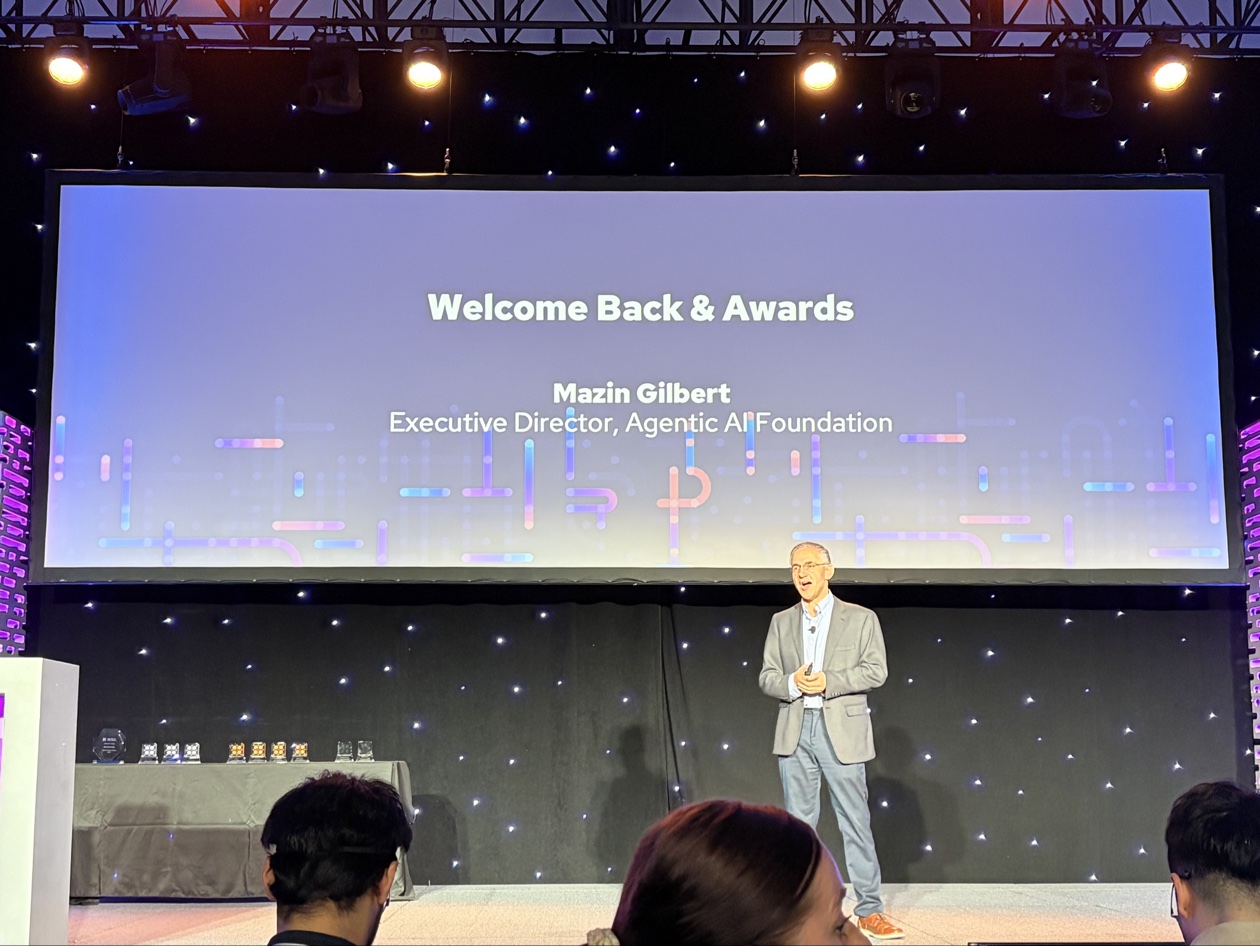
Friday opened by recognizing contributors and community builders. That was a fitting start to a morning that kept returning to how people can build on one another’s work.
Jonathan Bryce discussed improving the wider AI system, including smaller models and feedback from real use. Chi Wang demonstrated people and agents sharing rooms, carrying context across sessions, and coordinating while remaining accountable to their owners.
Paul Conyngham described working across disciplines to develop a personalized vaccine for his dog Rosie. His account included using AI to learn unfamiliar subjects and identify collaborators, alongside the scientific and clinical expertise needed to carry the work into the real world. It was a concrete example of why access to capable tools and access to knowledgeable people both matter.
Thomas Dohmke’s talk examined how to preserve the intent and decisions behind agent-written code. Shadaj Laddad discussed checking correctness through simulation and properties defined beyond an agent’s own generated tests. Rao Surapaneni covered the controls needed to grant agents more autonomy, and Kelly Fang discussed MCP across Anthropic’s products.
Tim O’Reilly’s discussion of the AI economy connected those technical questions to participation. Shared interfaces let people contribute useful pieces to a larger system. There is still work to do on the mechanisms that let that ecosystem function and sustain itself.
Together, these talks reinforced a practical point: useful AI needs shared context, ways to verify work, and room for people to contribute at different layers.
The afternoon sessions and what we learned
Agentic State Machines: Turning an Agent Loop into an Experimentation Platform
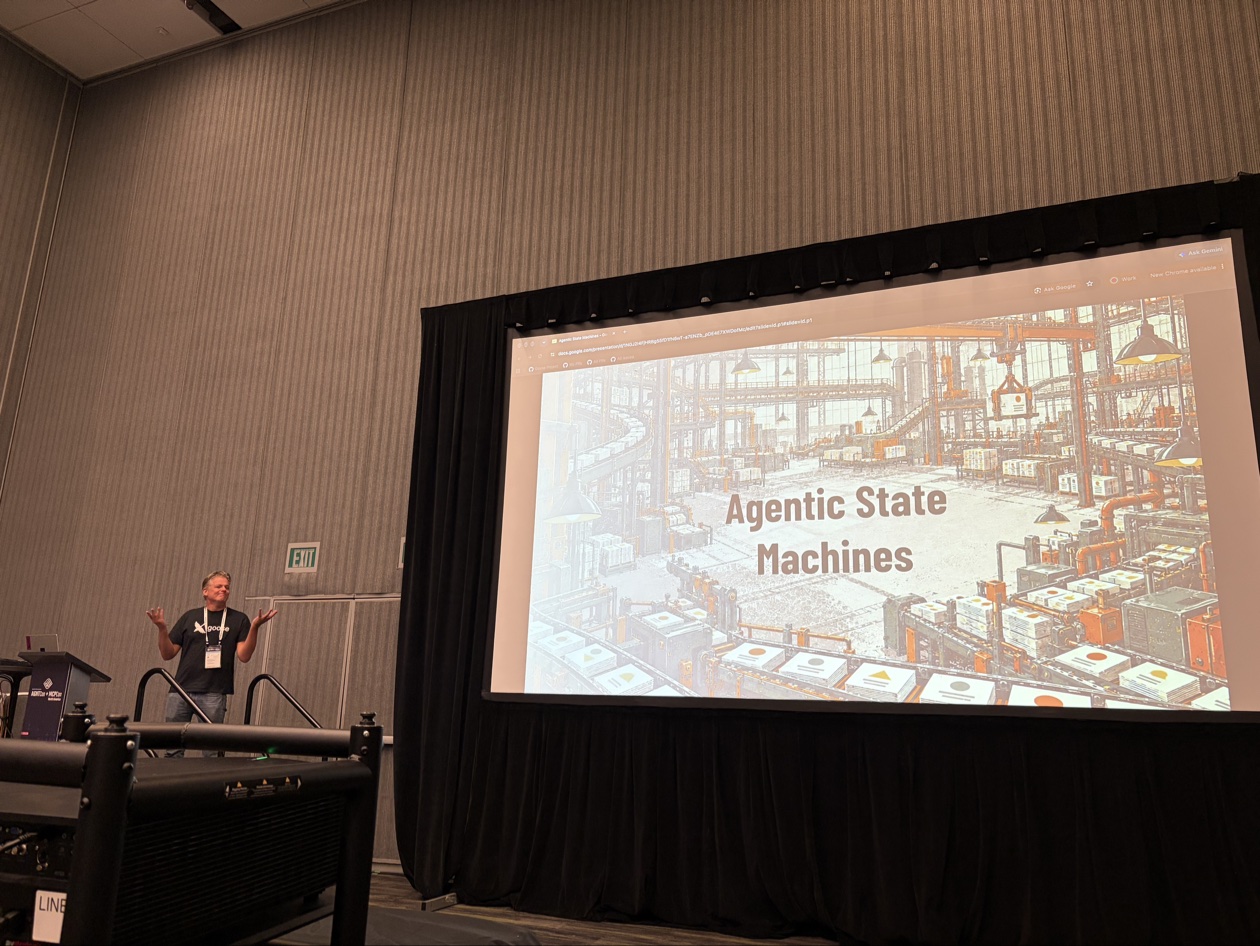
Douwe Osinga of Block explained how Goose moved from a growing agent loop to a state machine. The conversation becomes explicit state, and separate operations inspect it and return changes.
That makes it easier to pause, persist, resume, and test the work. It also gives contributors a way to experiment with one behavior without adding more complexity throughout the agent. For a customer workflow that pauses for approval, the question is concrete: can it resume with the same request and decision intact?
The Agentic Web for Industry Verticals
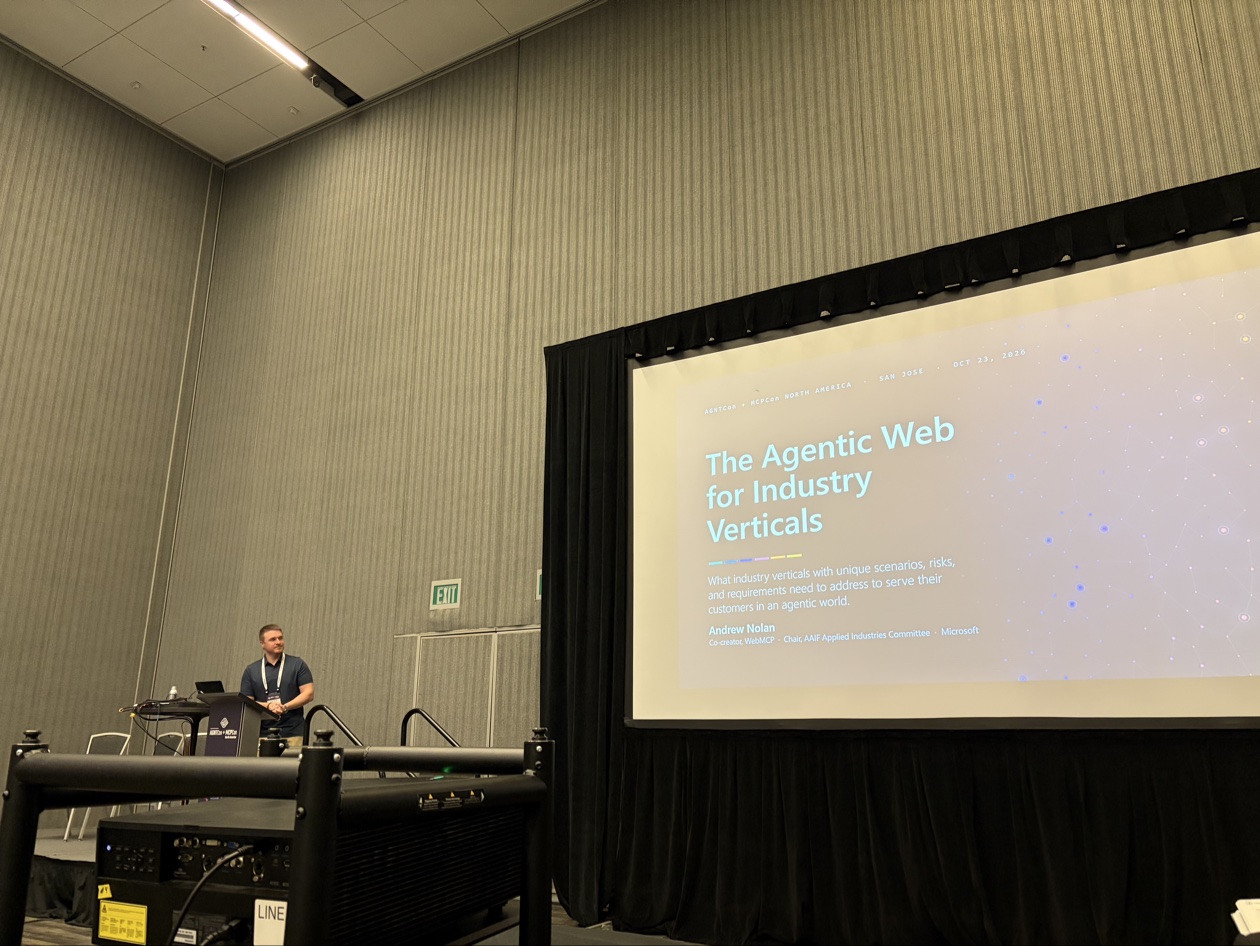
Andrew Nolan of Microsoft discussed the requirements different industries bring to the agentic web. Permissions need to hold as information moves between systems. Existing applications still have to work. People need to understand and trust what is happening on their behalf.
Brad asked about coverage for blue-collar and field workers during the Q&A. The discussion included field engineers in energy and utilities, and the Applied Industries Committee’s invitation for people to bring their use cases.
That is a useful way to contribute: bring a real workflow, the people who perform it, and the constraints that make it difficult. Those details help standards builders understand what needs to work beyond the conference demo.
Agentic Workflows Are Distributed Systems
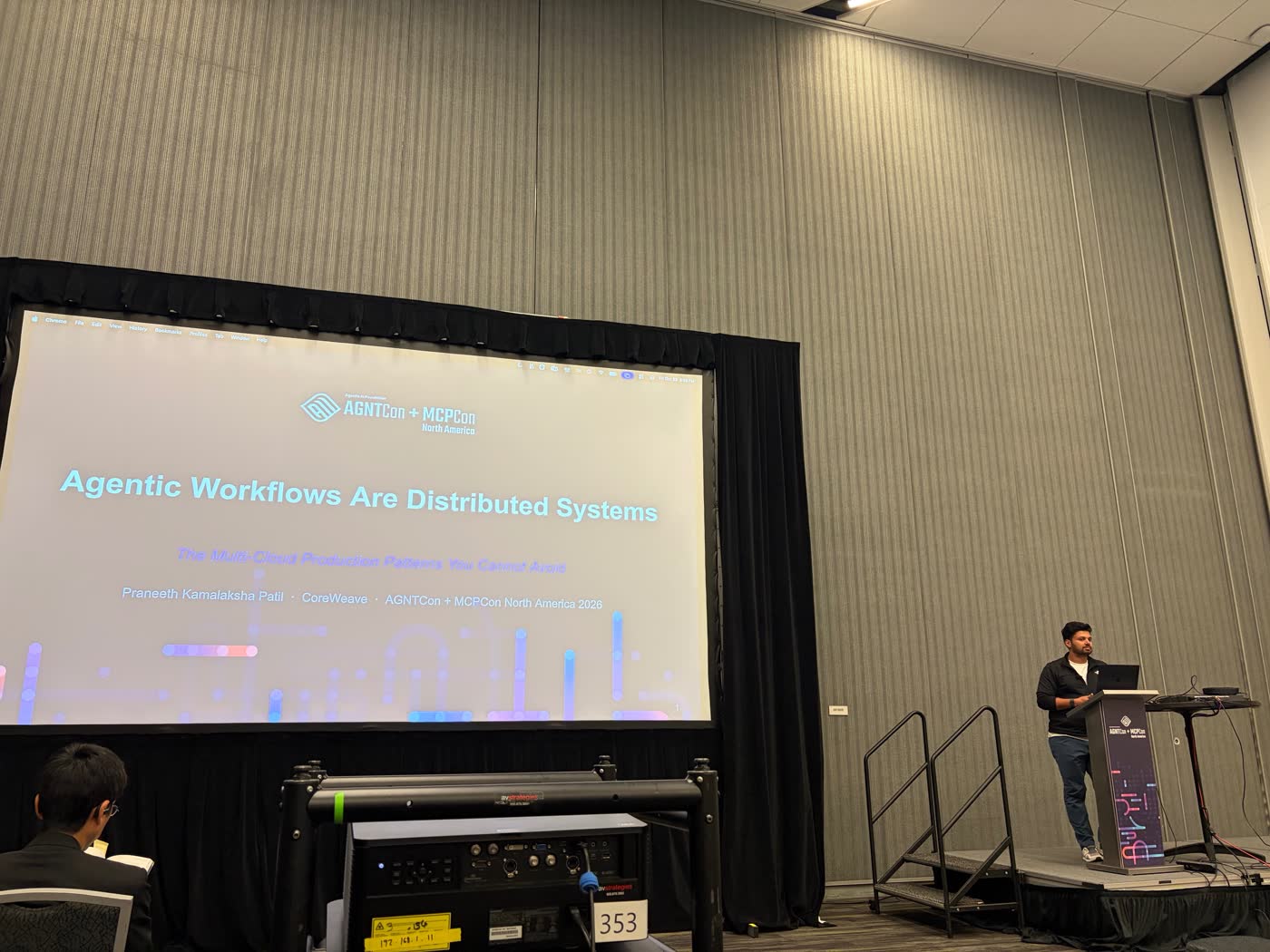
Praneeth Kamalaksha Patil of CoreWeave covered durable execution, safe retries, cold starts, and recovery when a workflow crosses systems.
Consider an agent booking something through a tool. If the request times out, it needs to determine whether the booking happened before trying again. Persisting the workflow and preventing duplicate actions are system responsibilities. The same applies to knowing which completed steps can be undone and which require a person to resolve.
For customer delivery, those failure paths deserve as much attention as the successful run.
Beyond Scraping: Building Agent-Ready Documentation Layers
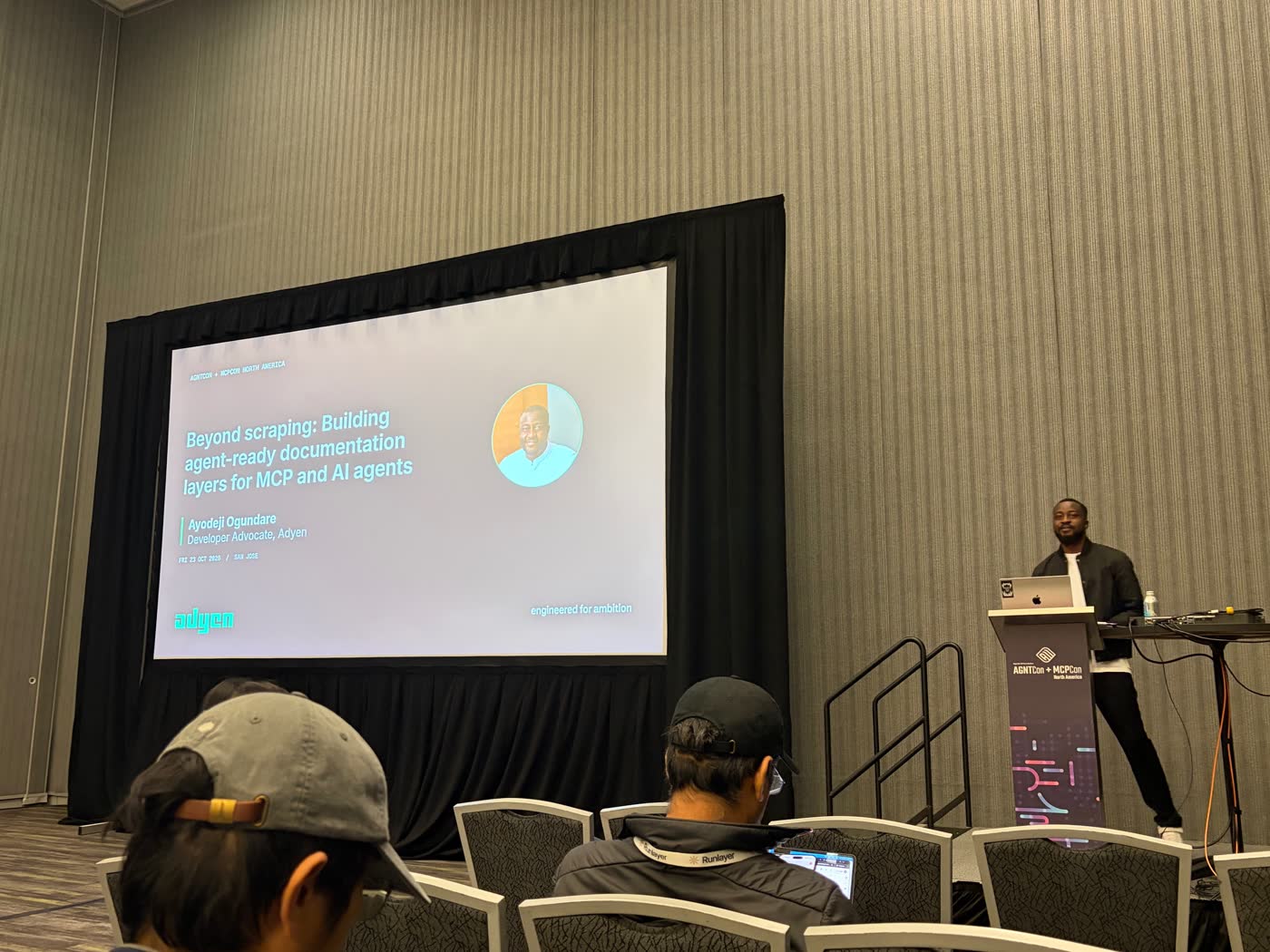
Ayodeji Ogundare of Adyen described making documentation easier for agents to discover, read, and use. His team’s approach included structured discovery, Markdown pages, downloadable documentation, and checking code examples against current SDKs.
The quality of the source material matters throughout that process. An agent can find a page quickly and still produce the wrong integration if the examples are outdated. Maintaining documentation is part of maintaining the product, especially when agents use it to write code.
Open technology needs an open community
Across the sessions, “open” meant several things: source people can inspect, protocols different products can implement, tools researchers can reproduce, and discussions where industry practitioners can help define the requirements.
Those contributions make it possible for a small team to build on work it could not reasonably recreate alone. They also create a responsibility to give something back.
Brad previously contributed as an OpenClaw maintainer for Microsoft platforms and continues contributing to Buzz. One merged Buzz fix preserved an explicitly requested mention that was being dropped when a message was signed. It is a small example of the work that makes software more dependable. His newer contributions include proposed app improvements and documentation corrections.
At Digital Meld, we also share our AI-Native Operating Framework, with its source on GitHub. It describes how people and AI can work with clear ownership, authority, evidence, and handoffs while keeping the operating method independent of a particular tool. It is open for review and contribution, with illustrative examples to review and adapt for an organization’s work.
Sharing code, documenting a lesson, reviewing a proposed change, or bringing a field-service use case into a standards discussion are all ways to participate. That is how we want to give back.
Thank you to the village
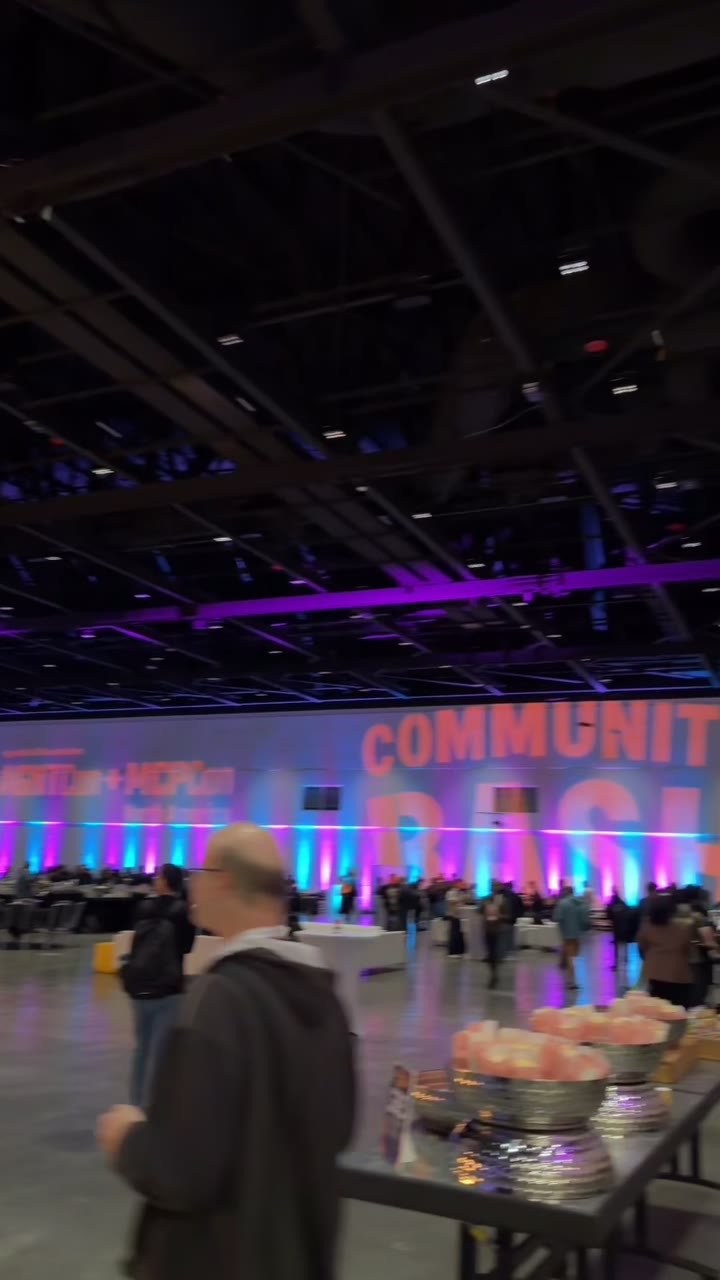
From the community bash featuring De La Soul to the Buzz booth, the sessions, and the evening at GitHub, the trip brought together people working on different parts of the same problems.
Thank you again to the Buzz and Block team for the invitation, to the Linux Foundation and Agentic AI Foundation for bringing the community together, and to everyone who shared their time and expertise.
The future of AI is open. We want to help build it by contributing useful work and bringing the needs of the people we serve into the conversation.
Photos and updates from the trip
Browse all 22 public updates from October 21–24, including the community events, sessions, Buzz showcase, and journey home. The original updates are at where.bradgroux.com.