
Microsoft partner. OpenAI partner.
AI and automation for midmarket blue-collar industries.
Digital Meld is a Microsoft AI Cloud Partner Program member and an OpenAI Partner Network partner. We help construction, engineering, and industrial teams map the workflow, connect the systems, and give people clear ownership. Our open research and AI-Native Operating Framework guide the implementation.
Our team holds dozens of certifications, including ChatGPT Expert, Codex Expert, and OpenAI API Expert. View OpenAI credentials
Selected work
Real work. Public proof.
See the work, what changed, and the public artifacts behind each case.
Digital Meld prototype
Industrial and field operations
6 public artifacts
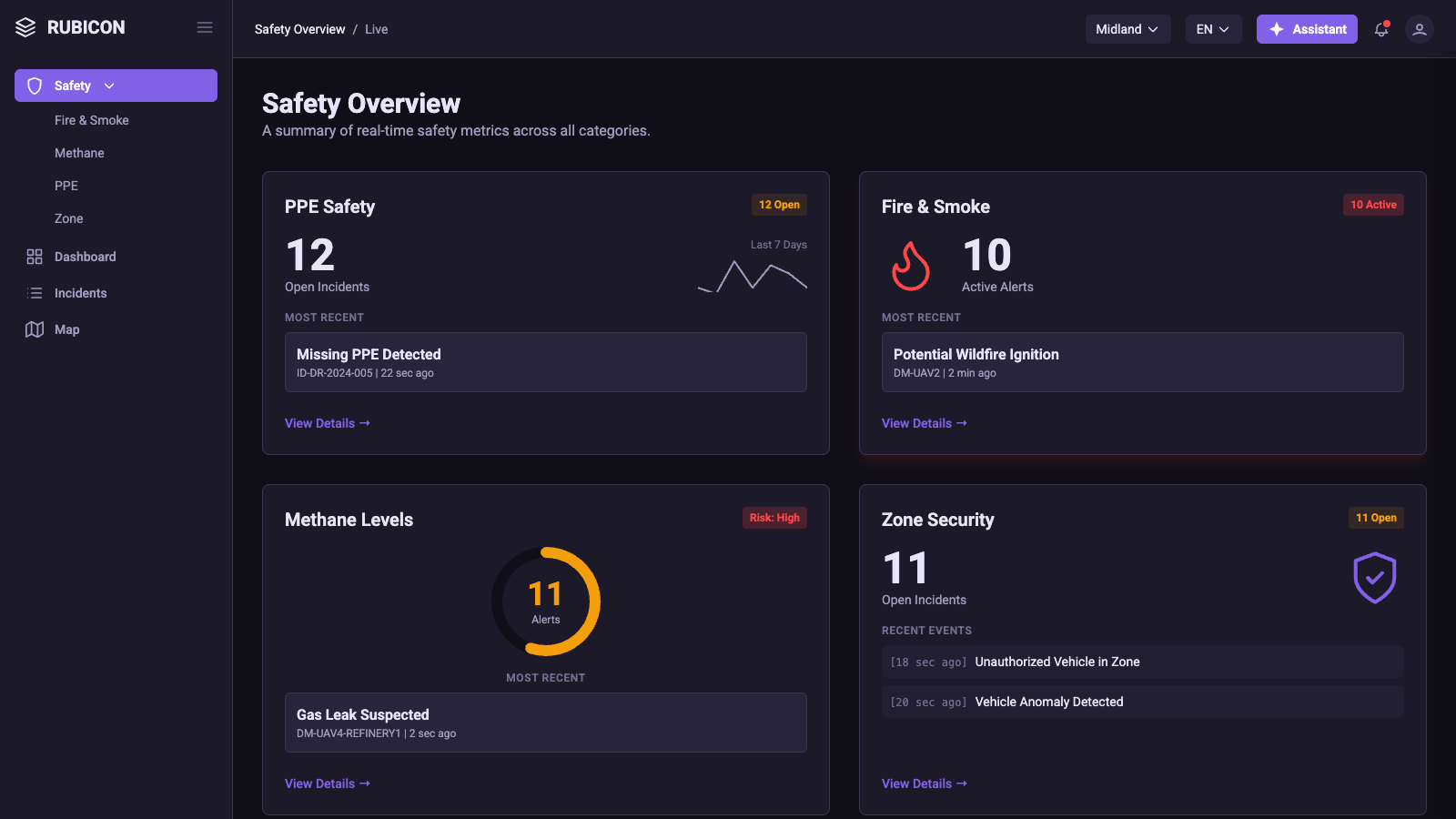
Designing a field-safety incident review workflow
A Digital Meld prototype for organizing camera, sensor, location, and incident signals into a reviewable workflow for construction and field-heavy operations.
Result
The prototype separates unlike safety signals before bringing them into one review surface.
What this does not show: This is a workflow-design result, not a measured safety outcome.
Digital Meld research
AI market structure and governance
2 public artifacts
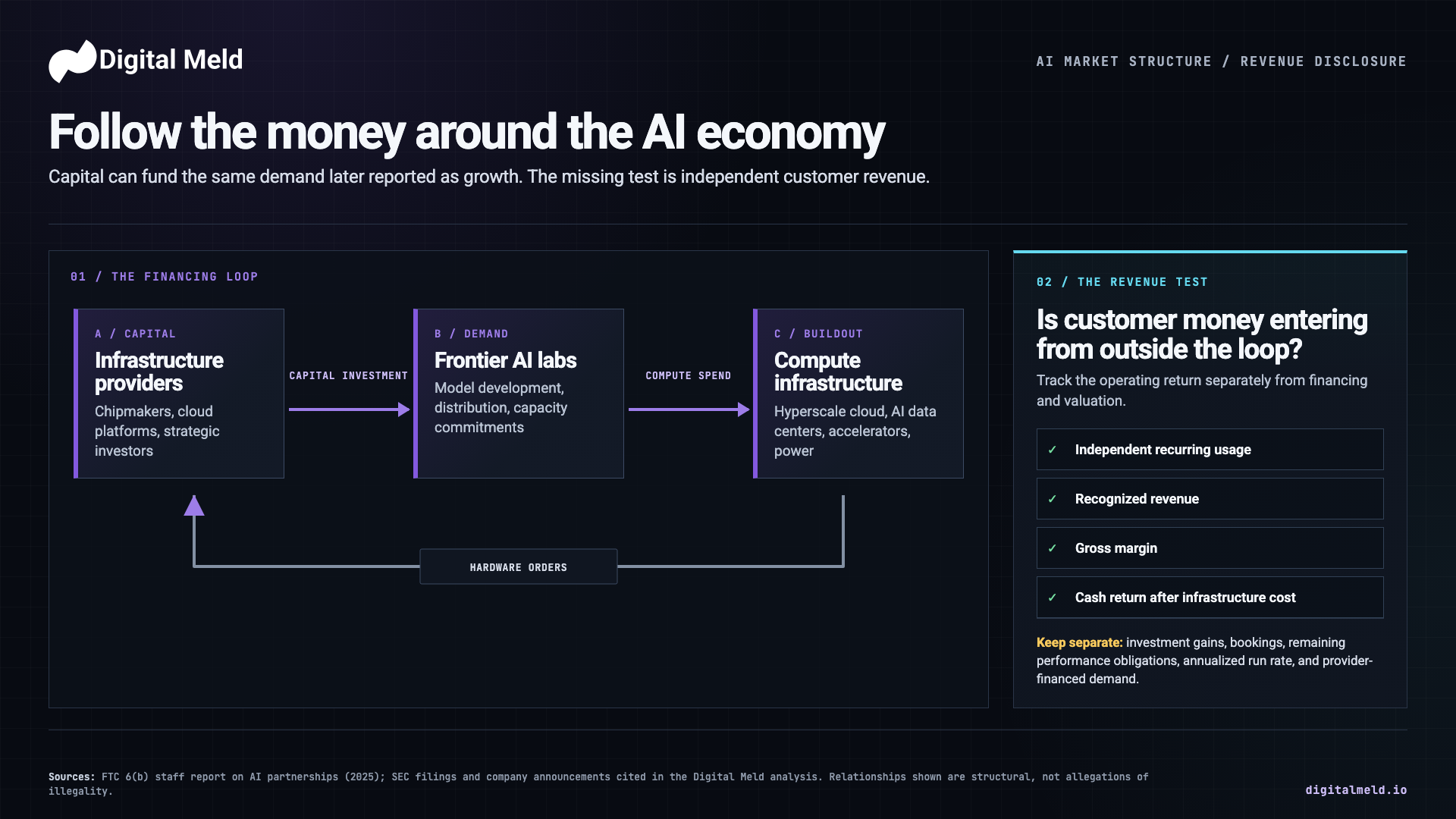
Researching who is paying for the AI boom
A primary-source investigation of circular AI financing, provider revenue, infrastructure constraints, AGI and ASI claims, and the case for independent regulation.
Result
Published one connected research record spanning AI financing structures, provider revenue disclosures, capability evidence, infrastructure constraints, and governance.
What this does not show: The work is a time-bounded research analysis, not a forecast of security values, a legal finding, or a prediction of a market failure date.
Founder delivery experience
M&A technology transition
1 public artifact
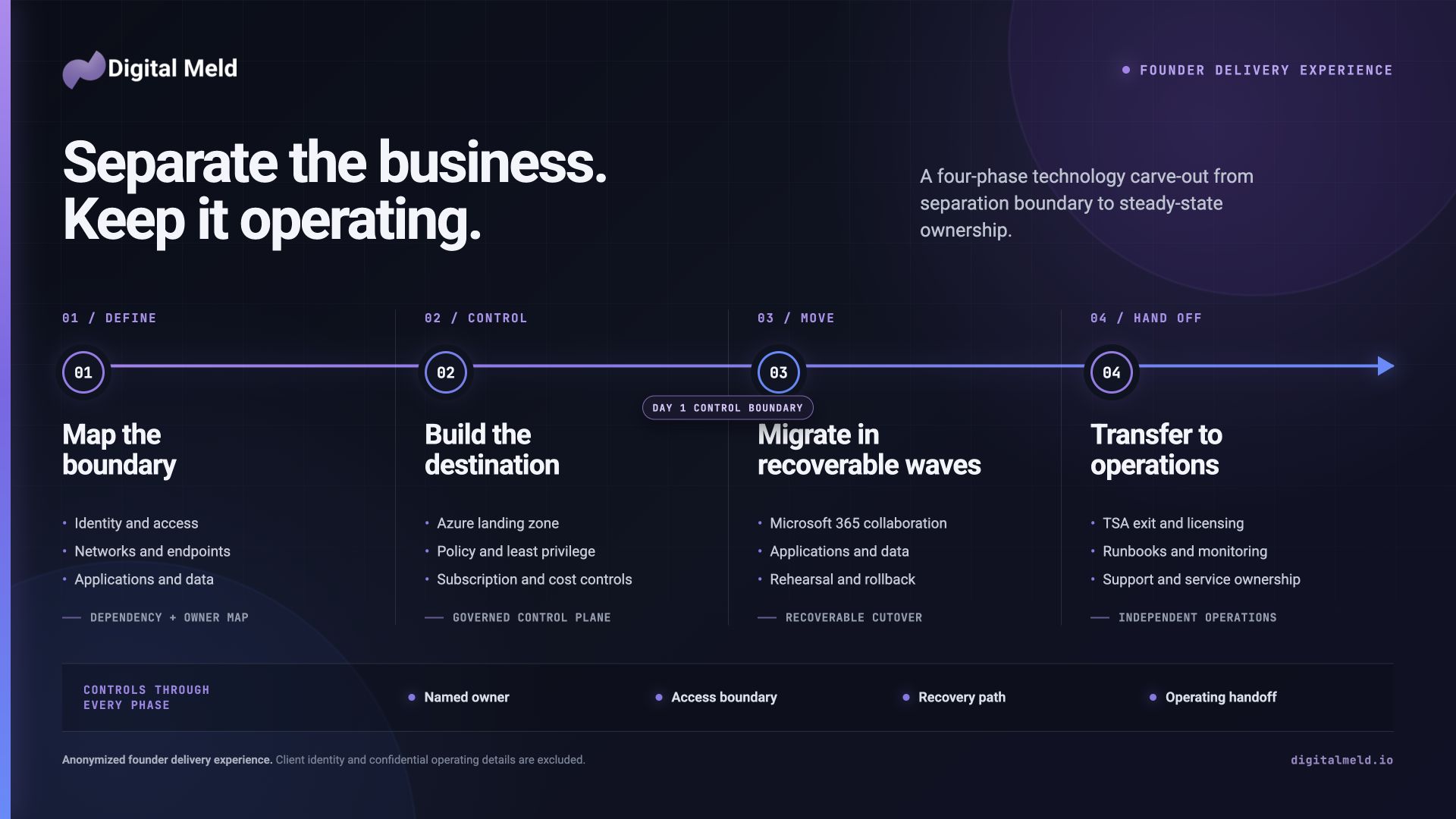
Separating Microsoft cloud in a divestiture
A technology carve-out sequenced across identity, infrastructure, Microsoft 365, Azure, applications, data, TSA exit, and steady-state ownership.
Result
The separated business had a defined technology ownership model for Day 1.
What this does not show: Client-specific outage, population, and service-level measures are not public.
Choose your path
One doorway. Four ways forward.
Explore the open framework, build practical skills, review completed work, or bring Digital Meld into a live business problem.
framework
Framework
Learn the open, vendor-neutral business method for shared operating standards across people, AI, teams, and changing tools.
learn
Learn
Use AI Dev Days, articles, guides, talks, and workshops to put the method into practice.
evidence
Work
Review case studies, public artifacts, implementation decisions, and results from completed work.
services
Services
Hire Digital Meld to assess, implement, migrate, govern, train, or operate the work in a real business environment.
The operating problem
Most AI work dies between the demo and the operating model.
The hard part is choosing the right workflow, connecting the systems, setting the guardrails, and giving an accountable operator enough context to use the result when the pressure is real.
Digital Meld researches in the open, develops practical systems with the people who use them, and applies the AI-Native Operating Framework to real work—so business standards stay clear, people and AI operate under accountable expectations, and tools serve the organization instead of defining it.
AI is changing quickly. Your organization does not need a permanent answer. It needs a durable way to define the work, preserve context, coordinate people and AI, make decisions, prove results, and learn through change.
Operating system
From pressure to shipped work
The useful work happens when the workflow, systems, data, and adoption path are shaped together.
Operating lifecycle
Enter where the work is stuck.
Scope the problem, build the system, operate with accountable senior capacity, or transform a high-risk environment. Each stage has a clear trigger and hiring path.
Scope
The workflow, risk, value case, or system boundary is still unclear enough that a larger build would be guesswork.
Build
The workflow and owners are known, but the integration, migration, automation, dashboard, or operational AI system still has to ship.
Operate
The business needs ongoing senior ownership, delivery pressure, measurement, and stabilization before it can justify a full internal bench.
Transform
A separation, integration, modernization, recovery, or capability transfer carries material identity, cloud, data, security, or business-continuity risk.
Industries
Built for operational complexity.
Digital Meld is strongest where technology has to meet real-world operations: field teams, project delivery, customer commitments, messy data, and systems that cannot simply stop while you modernize.
Construction & Engineering
Apply AI and automation to jobsite intake, project controls, finance, and closeout without making field teams re-enter the same record in every system.
Industrial Operations
Wire AI and automation into field signals, work records, human decisions, and maintenance ownership with visible failures and safe recovery.
Professional Services
Make intake, delivery, approvals, client reporting, and reusable knowledge operate as one accountable service workflow.
M&A Transitions
Sequence identity, cloud, applications, data, vendors, and operating ownership around Day 1, TSA exit, and post-close continuity.
Fit check
Deploy if the work needs operators. Abort if it only needs theater.
The fastest way to waste AI budget is to start without access, ownership, or a workflow worth improving.
Good fit
- You need AI wired into real workflows, not demos.
- Your team needs shipping momentum and senior technical judgment.
- You want operators who can scope, build, integrate, and hand off cleanly.
- You value practical automation over strategy theater.
Bad fit
- You only want a chatbot pasted onto your site.
- You want a 90-day strategy PDF with no implementation path.
- Your team will not provide the access and context needed to ship.
- You are chasing AI novelty instead of operational leverage.
Bring us the workflow that needs to change.
Start with the work, the people responsible for it, the systems involved, and the pressure you need to relieve. We will help identify the next useful move without forcing a larger engagement.